
The short answer.
- The two profiled four-single-bed studios let you compare location while keeping the sleeping arrangement similar.
- Skyliner arrives at Keisei Ueno; a Shinjuku-bound Narita Express arrives on JR. Add the correct hotel approach.
- Give repeated sightseeing returns more weight than a district's general reputation or an exit-based walking headline.
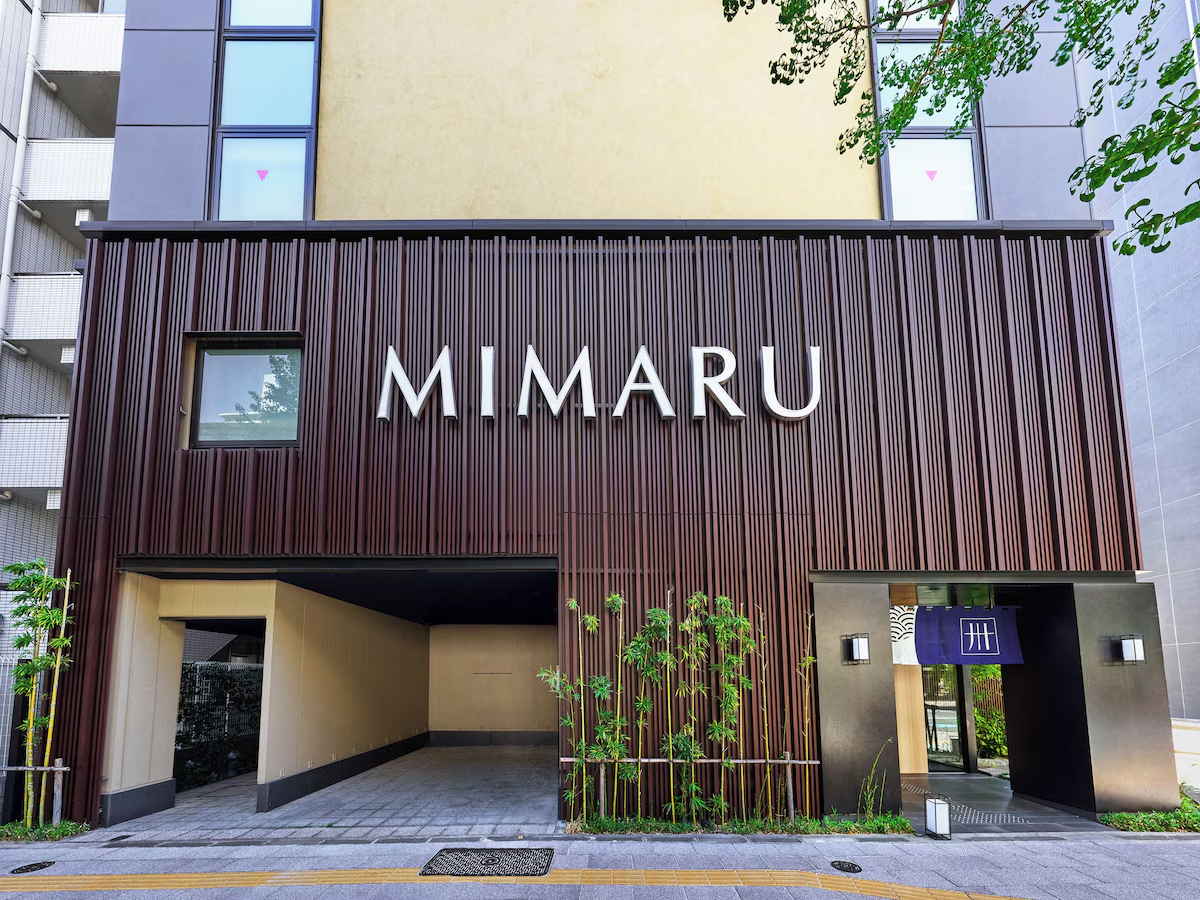
A property example for this guide.
MIMARU Tokyo Ueno East is one of the room profiles linked below. This photo shows the property, not a verified room layout or equipment.
Hold the sleeping arrangement constant first
A district comparison is easier when both rooms solve the same sleeping problem. MIMARU Tokyo Ueno East and MIMARU Tokyo Shinjuku West both list an Apartment (4 Single-Beds) studio. These are two specific categories to compare, not interchangeable apartment labels. Holding the bed arrangement constant lets you test location without also asking the children to switch between bunks and regular beds.
For two adults and two children who each need an ordinary bed, this removes a major variable. You can then ask whether the journeys around one address justify its full-stay quote. The category name does not establish usable suitcase space or the privacy your family needs. Inspect the layouts if either issue will decide the booking.
Published facts: MIMARU Tokyo Ueno East: four-single-bed room and named exits · MIMARU Tokyo Shinjuku West: room, JR and Toei approaches
Separate the railway operators before comparing destinations
Ueno and Shinjuku are both station names and wider hotel-area labels. At Ueno, distinguish JR Ueno, Metro Ueno and Keisei Ueno. At Shinjuku, JR and Tokyo Metro arrivals need their own exit plan; the hotel candidate here also publishes an approach from Toei's Tochomae station. A train reaching the district does not tell you which walk follows.
Ueno's Ginza Line also runs towards Shibuya, so staying there does not automatically mean a transfer for every western outing. Shinjuku's JR network supplies other options, including Yamanote trains towards Shibuya and Chuo rapid trains towards Tokyo. Compare the service you would actually use rather than awarding either neighbourhood a blanket direct-train advantage.
| Network question | Ueno candidate | Shinjuku candidate |
|---|---|---|
| Tokyo Metro | Ueno: Ginza and Hibiya lines | Shinjuku: Marunouchi Line |
| JR city connection | JR Ueno; check the required platform and direction | Yamanote towards Shibuya; Chuo rapid towards Tokyo |
| Narita service to inspect | Keisei Skyliner to Keisei Ueno | Shinjuku-bound JR Narita Express |
| Another published hotel approach | Metro Ueno Exit 1 | Toei Oedo Line Tochomae, separate from JR Shinjuku |
Published facts: Tokyo Metro: Ueno Ginza and Hibiya lines · Tokyo Metro: Shinjuku Marunouchi Line · JR East: Shinjuku lines and directions · Keisei: Skyliner Ueno and Nippori service · JR East: Narita Express service branches · Toei: Tochomae Oedo Line station and facilities · MIMARU Tokyo Ueno East: four-single-bed room and named exits · MIMARU Tokyo Shinjuku West: room, JR and Toei approaches
Give the airport journey a service name, then a hotel route
For Narita, compare Skyliner's Keisei Ueno arrival with a Shinjuku-bound Narita Express. JR's route page also shows an Ofuna branch, so check the booked destination rather than treating every N'EX departure as a Shinjuku train. Keisei Ueno is not the JR Iriya Exit named by the Ueno hotel. Add the real last segment to both candidates.
For Haneda, Tokyo Monorail runs to Hamamatsucho and publishes onward access information for both Ueno and Shinjuku. Compare those connections with your hotel approach. Enter the terminal, actual arrival date and intended hotel arrival time into the current journey check. A favourable airport train can help, but one arrival and departure should not outweigh several awkward daily returns.
Published facts: Keisei: Skyliner Ueno and Nippori service · JR East: Narita Express service branches · Tokyo Monorail: Hamamatsucho and onward Tokyo destinations · MIMARU Tokyo Ueno East: four-single-bed room and named exits
The final walks differ even with the same bed layout
The hotel's published estimates below start at named exits. They exclude your journey through the station and are not family door-to-door forecasts. In particular, the Shinjuku West hotel is not immediately outside JR Shinjuku, and its closer Toei approach begins at a different station. Choose the approach that follows your actual train.
For a stroller, use each property's linked universal-design map and the relevant operator's current facilities. A shorter published walk from one exit does not establish that it is your step-free route. Save the correct entrance and a practical alternative for arrival with bags; repeat the check for your usual sightseeing return.
| Property | Named approach | Published walk | What remains to plan |
|---|---|---|---|
| MIMARU Tokyo Ueno East | JR Ueno Iriya Exit | 3 minutes | Platform to exit; different route after Skyliner |
| MIMARU Tokyo Ueno East | Metro Ueno Exit 1 | 5 minutes | Arriving line and suitable surface exit |
| MIMARU Tokyo Shinjuku West | JR Shinjuku South Exit | 10 minutes | Platform to south side, then hotel walk |
| MIMARU Tokyo Shinjuku West | Tochomae A2, Toei Oedo Line | 8 minutes | Whether this station fits the actual journey |
Published facts: MIMARU Tokyo Ueno East: four-single-bed room and named exits · MIMARU Tokyo Shinjuku West: room, JR and Toei approaches · Tokyo Metro: Ueno Ginza and Hibiya lines · Toei: Tochomae Oedo Line station and facilities
Hypothetical itinerary A: the Hibiya Line shapes the stay
Two adults and two school-age children plan an Akihabara afternoon, a Tsukiji morning, one Ueno museum visit and one flexible day. Tokyo Metro's Hibiya Line serves Ueno, Akihabara and Tsukiji. Begin with the Ueno East room and test its Metro approach for the two rail outings. This is a different reason for staying in Ueno from simply having a Skyliner ticket.
The museum is one item to locate precisely, not proof that every Ueno attraction is at the hotel door. Check its entrance and calendar. If the flexible day becomes a second western outing, rerun the comparison from the hotel to those destinations. This example does not establish attraction opening, seat availability or the family's travel time.
Published facts: Tokyo Metro: Hibiya Line station sequence · GO TOKYO: Ueno museums and area · MIMARU Tokyo Ueno East: four-single-bed room and named exits
Hypothetical itinerary B: several days finish around Shinjuku
Two adults and two teenagers plan Shinjuku Gyoen, the Metropolitan Government Building observatory and a Shibuya outing, with one Tokyo Station day. GO TOKYO lists the garden and government-building views among Shinjuku's daytime activities. Start by testing the Shinjuku West room against these exact entrances and the JR journeys; the repeated western pattern gives it a reason to enter the shortlist.
That does not make its ten-minute South Exit estimate a universal advantage. Compare the return from each destination to the room, especially after the Shibuya day. If the family dislikes the last walk, a Ueno room with a satisfactory route may still win. Check attraction calendars independently and keep this scenario separate from any claim about a district being quieter or safer.
Published facts: GO TOKYO: Shinjuku daytime attractions · JR East: Shinjuku lines and directions · MIMARU Tokyo Shinjuku West: room, JR and Toei approaches
Compare a complete quote for each usable address
Enter the same travellers, dates and four-single-bed category for both properties. Match cancellation and payment conditions before interpreting a price difference as a location premium. Then attach your airport service, daily stations and hotel walks to each quote. Keep any unsolved approach visible rather than silently awarding it the hotel's shortest walking estimate.
Choose the address whose room and journeys work together. If the itinerary is evenly split, the clearer final approach or better complete quote may decide it. If you plan to return for a rest every afternoon, those extra trips deserve more weight. The result should identify a specific room and its repeated routes, with a reason for paying the selected total.
Questions families ask.
Does a Ueno hotel make Shibuya a transfer journey?
Not automatically: Metro Ueno's Ginza Line runs towards Shibuya. Compare that route and both hotel walks with the Shinjuku option. A direct line alone does not establish the best complete journey for a particular address.
Is the Ueno East three-minute walk measured from Skyliner?
No. The hotel's estimate starts at JR Ueno's Iriya Exit. Skyliner uses Keisei Ueno, so plan the remaining route from that arrival point rather than applying the JR exit estimate to the airport train.
Is Tochomae the same arrival as JR Shinjuku?
No. Tochomae is a Toei Oedo Line station with its own platform and exits. The Shinjuku West property publishes separate approaches from Tochomae A2 and JR Shinjuku South Exit; select the one that fits your actual train.
Sources and scope.
- MIMARU Tokyo Ueno East: four-single-bed room and named exits
- MIMARU Tokyo Shinjuku West: room, JR and Toei approaches
- Tokyo Metro: Ueno Ginza and Hibiya lines
- Tokyo Metro: Shinjuku Marunouchi Line
- JR East: Shinjuku lines and directions
- Keisei: Skyliner Ueno and Nippori service
- JR East: Narita Express service branches
- Toei: Tochomae Oedo Line station and facilities
- Tokyo Monorail: Hamamatsucho and onward Tokyo destinations
- Tokyo Metro: Hibiya Line station sequence
- GO TOKYO: Ueno museums and area
- GO TOKYO: Shinjuku daytime attractions
Hotel and transport conditions can change. This is a planning guide based on published information, not a promise of availability or a report of a personal hotel stay.
Ready to choose a room?
Compare our researched room profiles, then check your dates and guest ages on the booking page.